
Types of Insurance a Licensed Producer Can Sell in Illinois

Your Phone Is Your Classroom
Aceable Insurance's Illinois courses are mobile-first, self-paced, and built for the Pearson VUE exam.
Quick Answer:
- Illinois recognizes six main lines of authority: life, health (and accident), property, casualty, variable, and limited lines.
- Each line requires 20 hours of pre-licensing education and a separate state exam through Pearson VUE (except limited lines, which requires no exam).
- Most producers start with two or four lines (Life and Health, Property and Casualty, or all four) and add specialty lines as their career grows.
What Lines of Authority Are Available in Illinois?
The Illinois Department of Insurance is the state authority that licenses insurance producers, and the agency defines the lines of authority that determine what you can sell. Here's what each line covers.
Life Insurance Line of Authority
Producers with the life line can sell products that pay financial benefits to named beneficiaries upon the death of the insured. Products include:
- Term life insurance
- Whole life insurance
- Universal life insurance
- Final expense and burial insurance
Health (and Accident) Line of Authority
The health line authorizes producers to sell products covering medical expenses, disability, and accidental injury. Products include:
- Individual and group health insurance
- Dental and vision plans
- Disability income insurance
- Long-term care insurance
- Medicare supplements and Medicare Advantage
Property Insurance Line of Authority
Producers with the property line can sell products that protect against financial loss from damage to or destruction of property. Products include:
- Homeowners insurance
- Renters insurance
- Commercial property insurance
- Inland marine and equipment coverage
Casualty Insurance Line of Authority
The casualty line authorizes producers to sell liability-focused products covering legal obligations from injury or property damage. Products include:
- Auto liability insurance
- General and umbrella liability
- Workers' compensation
- Professional liability (errors and omissions)
Variable Insurance Line of Authority
The variable line authorizes producers to sell investment-linked insurance products such as variable annuities and variable life insurance. Selling variable products typically requires additional securities licensing (Series 6 or Series 7, plus Series 63) through FINRA, on top of the Illinois variable line.
Limited Lines
Limited lines cover narrowly defined specialty products. Products include:
- Travel insurance
- Crop insurance
- Industrial fire insurance
- Self-service storage insurance
Limited lines producers do not need to pass a state exam, which makes this category an unusually fast entry point for narrow specialties.
Which Lines Should an Illinois Producer Start With?
The right combination depends on your goals, but most new producers in Illinois follow one of three common starting paths.
Path 1: Life and Health Combination
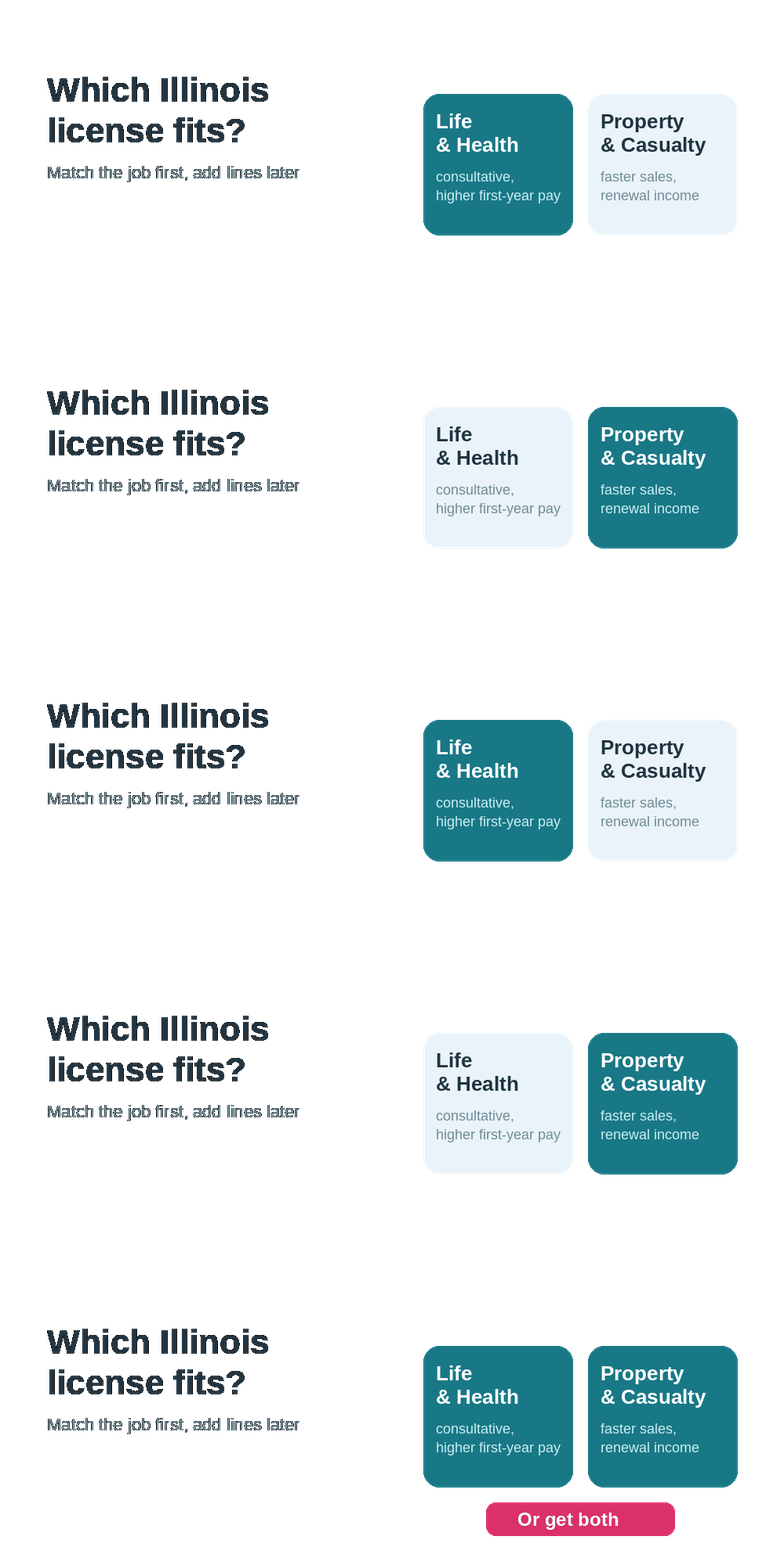
Best for producers who want to focus on consultative selling, family financial planning, and benefit-rich products. Life and health typically pay higher first-year commissions than property and casualty. Learn more in our guide to life and healthPre License Why Become A Life Health Insurance Agent Resources.
Path 2: Property and Casualty Combination
Best for producers who prefer faster sales cycles, frequent client interactions, and steady renewal income. P and C policies renew annually, which builds recurring commission income over time. Explore the case for Illinois P&CPre License Reasons To Sell Property Casualty Insurance In Illinois Resources.
Path 3: All-Lines Combination
Best for producers aiming for full-service independent agencies, where serving a client's full insurance footprint creates the largest book of business per household. This path takes longer to license (80 hours of pre-licensing across four lines) but positions you to capture life, health, auto, home, and commercial revenue from each client.
If you're still weighing options, our breakdown of first license decisionsPre License Which Insurance License Should I Start With Resources walks through the trade-offs.
Choose a State and Course
More Lines, More Money
Each line you add multiplies your earning ceiling, and the Aceable Insurance Salary Guide shows by how much

Which Illinois license fits the work you want?
The lines above tell you what each license allows. This section turns that into a decision. Start from the job you want in twelve months, not from the course that looks easiest, because in Illinois every line costs the same 20 hours and the same exam day.
You have a job offer or a recruiter waiting
Get the line the employer named, and only that line, first. A captive carrier that sells auto and home wants property and casualty; a benefits agency or final-expense shop wants life and health. Your start date depends on passing one set of exams, so adding a second line before you are hired only delays the paycheck. You can add lines later using the same process.
You want renewal income that compounds
Choose property and casualty. Auto and home policies renew every year, and most carriers pay commission on each renewal, so a book you write this year still pays next year. It is the line most new producers in Illinois use to build a steady base, and our look at selling P&C in the state explains why the Chicago and suburban markets reward it.
You want the largest first-year commissions and consultative work
Choose life and health. First-year commissions on life and annuity products are typically the highest in the industry, and health opens Medicare, group benefits, and disability work. The trade-off is a longer sales cycle and less automatic renewal income than P&C. If that trade-off sounds right, our guide to life and health careers lays out the day-to-day.
You want to run your own independent agency
Plan on all four lines eventually, but sequence them. Most independent agency owners in Illinois start on P&C to build a client base, then add life and health to serve those same households. Trying to test on four lines in one month is the most common way to fail two of them.
When should you get both?
Get both life and health and property and casualty when one of these is true.
- Your employer sells both. Many independent agencies and some captive carriers expect producers to cross-sell life policies to auto and home clients. Holding both lines makes you the person who can close that conversation.
- You are building for ownership. An agency that can insure a family's home, cars, and income keeps more of each household's business and loses fewer clients to competitors.
- You already hold one line and your book has stalled. Adding the second line is the fastest way to grow revenue from clients you already have, without buying new leads.
Do not get both simply because a course bundle makes it cheap to try. Each line adds 20 hours of pre-licensing, 7.5 of them live, and two exams that must be passed within 90 days of each other. If you are not sure which single line to start with, our breakdown of first license decisions walks through the trade-offs line by line.
What does each license cost and how long does it take in Illinois?
Time is the same for every major line, and the cost has the same four parts. Amounts change, so we point you to the state's current fee schedule rather than printing numbers that go stale.
How long each line takes
- Pre-licensing: 20 hours per line, including 7.5 hours of live classroom or webinar instruction. Fastest realistic pace is about one week per line; a typical working adult takes two to three weeks.
- Exams: a General exam and a State exam for each line, taken in person at a Pearson VUE test center. Most candidates schedule both on the same day within one to two weeks of finishing the course.
- Waiting period: Illinois requires a five-day wait after your final exam pass before you can submit the license application.
- Application: submitted through the National Insurance Producer Registry (NIPR) to the Illinois Department of Insurance. Approval typically takes a few business days once the exam results and application match.
Put together, one line takes about three to six weeks from enrollment to license. Two lines taken back to back run six to ten weeks. Your certificate of completion is valid for one year, so you have room to space exams out if work gets in the way.
What you pay for
- Pre-licensing course: set by the provider, once per line.
- Exam fees: paid to Pearson VUE per exam sitting, including retakes.
- State license application fee: paid to the Illinois Department of Insurance through NIPR, plus NIPR's transaction fee. One application covers every line you passed.
- No fingerprinting fee: Illinois producer applicants answer background questions on the application rather than submitting fingerprints.
Current state fees are published by the Illinois Department of Insurance, and NIPR lists its transaction fee on the Illinois resident licensing page. Compare that total to what a first-year producer earns in the state, covered in our guide to Illinois agent income, and the license pays for itself quickly.
How do you enroll once you have decided?
- Pick your first line using the section above. If an employer is waiting, match their line.
- Enroll in a state-approved 20-hour course that includes the 7.5 live hours. Aceable Insurance's Illinois courses build the live webinar sessions into the schedule so you are not booking them separately.
- Complete the course and pass the certification exam at the end of it to earn your certificate of completion.
- Register for the General and State exams with Pearson VUE and bring your certificate to the test center.
- Wait five days after your final pass, then apply through NIPR. Your license posts once the Illinois Department of Insurance approves the application.
If you want to see what exam day actually looks like before you commit, our guide to the Illinois exam covers the format, the passing score, and what happens if you need a second attempt. When you are ready, choose your Illinois course and lock in your first line.
License Up, Illinois
Choose from one of our three exciting license types and kickstart your journey with our pre-licensing course today!