
What Insurance Agents Actually Earn in Their First Year
Three to six weeks. Then your first commission check.
Aceable's mobile-first courses were built for career changers who are ready to go.
Quick Answer
- Most new insurance agents earn between $45,000 and $75,000 in their first year. Top P&C producers in major metros clear six figures.
- BLS reports the occupation-wide median for insurance sales agents at around $60,000. The bottom 10 percent earns around $41,500. The top 10 percent earns over $130,000.
- License type, agency structure, state market, and first-90-day activity drive whether you land at the top or the bottom of the first-year range.
First-year insurance agents usually earn less than experienced agents because year-one income is almost entirely new-business commission. The Bureau of Labor Statistics reports that the top 10 percent of insurance sales agents earn more than three and a half times what the bottom 10 percent earn. For a new agent, the more useful question is when each paycheck actually shows up.
What does a first-year insurance agent actually earn?
Start with the right benchmark. The BLS pay dataSales Insurance Sales Agents.htm#tab 5 Ooh puts the median wage for insurance sales agents roughly a fifth above the median for all occupations. That figure blends rookies with twenty-year veterans, so a first-year agent should expect to land below it.
The spread is the real story. Nobody jumps from the bottom tenth to the top tenth in twelve months. The agents who eventually get there tend to build the same way: a steady weekly pipeline and a book of business that renews.
Why the published median can mislead you
BLS wage figures cover employees of agencies and carriers. They exclude self-employed workers, who make up about 12 percent of the occupation according to the same BLS profileSales Insurance Sales Agents.htm#tab 3 Ooh.
That means independent agency owners and brand-new commission-only agents both sit partly outside the number you see quoted everywhere. Treat the median as a direction, not a promise.
How are new insurance agents paid?

BLS names the common pay structures, and each one shapes your first year differently:
- Salary only: The most predictable option, with the weakest link between effort and pay.
- Salary plus commission: A common starting package at agencies and carriers. The salary covers the ramp while commissions grow.
- Salary plus bonus: Pay rises when you or the agency hit production goals.
- Commission only: Common for independent agents. The ceiling is highest, and so is the gap before the first check.
Some agencies also offer a draw, an advance against commissions you have not earned yet. It smooths cash flow, but a recoverable draw works like a loan you repay from future commissions.
Questions to ask before you accept a draw
- Recoverable or not: Do you owe it back if commissions fall short?
- Exit terms: What happens to an unpaid balance if you leave?
- Step-down schedule: Does the draw shrink by date or by production?
The answers differ sharply by agency model. Our captive versus independentPre License Captive Vs. Independent Insurance Agent Resources guide breaks down how each one typically pays.
When does the money actually arrive in year one?
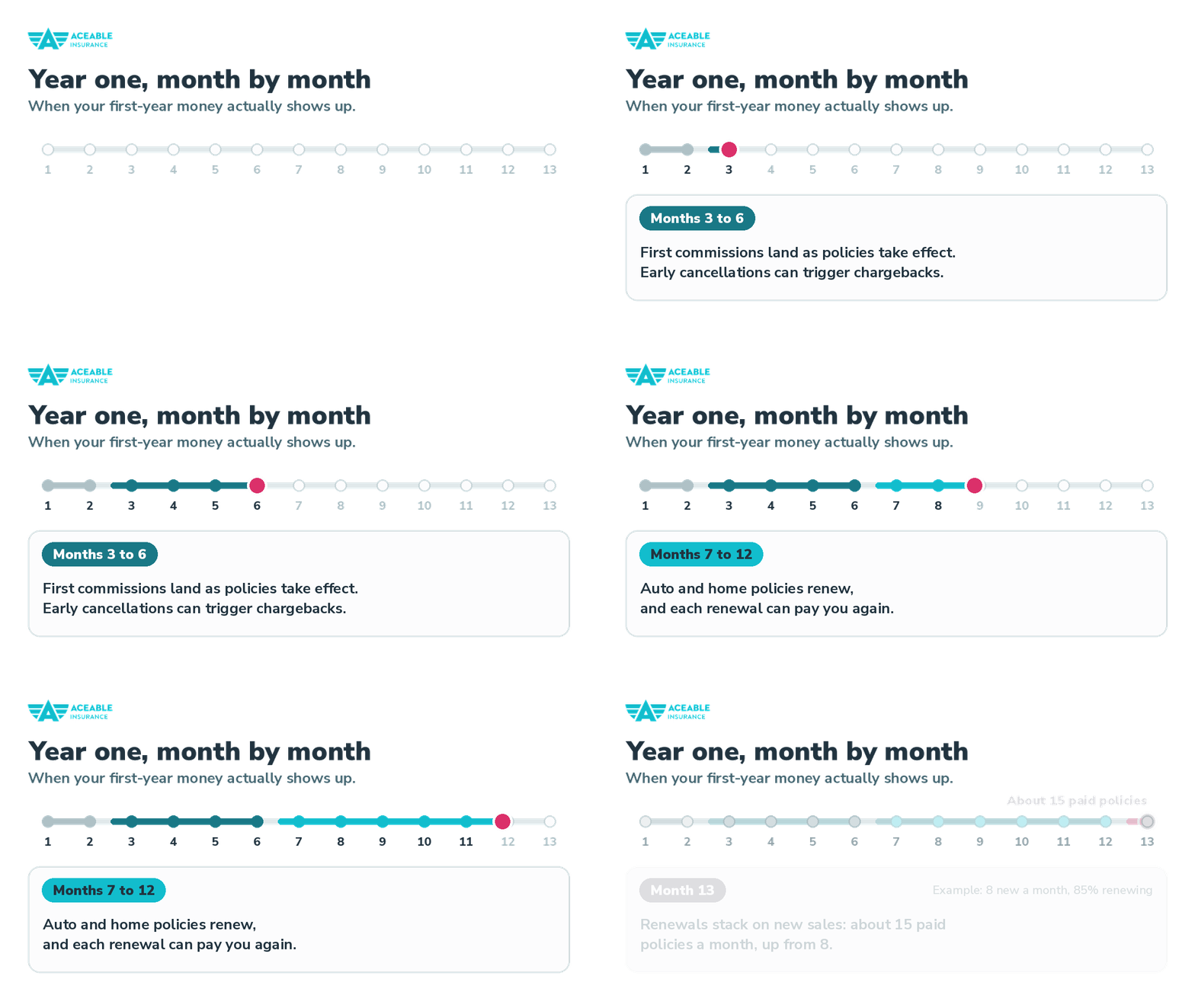
Annual salary math hides the thing that stresses new agents most: timing. Here is how a commission-heavy first year tends to unfold.
Months one and two: licensed, appointed, mostly learning
You finish licensing, get appointed with carriers, and learn their quoting systems. An appointment is what lets you sell a carrier's products and get paid on them, so paperwork speed matters.
Income in this stretch comes mostly from any salary or draw.
Months three through six: first commissions, first chargebacks
Commissions start landing as policies take effect. Many contracts include a chargeback: if a client cancels early, the carrier takes back some or all of your commission.
A strong month on paper can shrink a month later. Track net commission, not written premium.
Months seven through twelve: renewals start stacking
Auto and home policies renew on six- or twelve-month terms, and each renewal can pay you again. This is where the curve bends upward, even if new sales stay flat.
The Medicare timing trap
Medicare's annual Open EnrollmentOpen Enrollment Health Drug Plans runs October 15 through December 7, and changes take effect January 1. If your contract pays on the effective date, your busiest seven weeks pay out in the new year.
Budget for a quiet fourth quarter, and the January deposit becomes a milestone instead of a rescue.
How much does a renewing book change year-two income?
Run the math on policy count, not dollars. Say you write 8 policies a month and 85 percent of clients renew. By the end of year one, you have written 96 policies.
In month thirteen, the policies from month one come up for renewal. Keep 85 percent and about 7 renew, so you have roughly 15 paid policies that month instead of 8, before one extra sale.
Renewal commission can be smaller than new-business commission, especially in life insurance, so dollars grow slower than policy count. The direction still holds: year two pays for year one's work. That same renewal base is why agents weather economic downturnsPre License Is Insurance Really A Recession Proof Career Resources better than most salespeople.
Which lines change the shape of the curve
- Property and casualty: Smaller per-policy commissions, frequent renewals, steadier months. See whether the P&C pathPre License Is Becoming A Licensed Property And Casualty Insurance Agent Worth It Resources fits you.
- Life insurance: Larger first-year commission per sale, longer sales cycles, lumpier months. More on selling life insurancePre License Is Selling Life Insurance A Good Job Resources.
- Medicare and health: Heavy seasonality around enrollment windows, with renewals that can steady the following year.
Choose a State and Course
Top first-year earners clear six figures. Spoiler: they all started the same way.
See our FREE salary guide to what you could earn in your state.

How do you estimate your own first-year income?
- Get the commission schedule in writing. Ask for new-business and renewal rates by product before you sign anything.
- Ask when commission pays. On application, on issue, or on the effective date. The answer can move money by weeks or months.
- Learn the chargeback window. Know how long a policy must stay in force before the commission is fully yours.
- Set a weekly activity number. Policies per week drives everything else in your first-year curve.
- Run it through the calculator. Compare your break-even month with your savings runway.
For regional context, see what a Texas first year looks like, or how pay shifts across the best-paying roles.
What can slow down your first-year income?
- Licensing and appointment delays. Late fingerprints or a slow carrier appointment push every commission back.
- Early cancellations. Chargebacks erase commission on policies that do not stick.
- A long-cycle line with no cushion. Life and commercial sales can take weeks to close.
- A prospecting gap in months two through four. The pipeline you build early pays later. Skip it and later is thin.
- Paid-on-effective-date timing. Seasonal lines like Medicare push income into the next quarter.
How fast can you start earning after you decide?
Licensing time sets your start date. Texas requires no pre-licensing course for its general lines licenses, so candidates licensed by the Texas Department of Insurance can move straight to the Pearson VUE exam.
Florida sits at the other end: its 2-20 property and casualty license requires 200 hours of pre-licensing under Florida law. Across most states, plan on four to eight weeks from first lesson to license, with a faster finish possible where no course is required.
Our licensing guide walks through every step.
First-year insurance pay: quick answers
Do new insurance agents get paid during training?
It depends on the seat. Salaried and salary-plus-commission roles pay during training, while commission-only roles usually do not, which is why a savings cushion matters.
How long until renewals make a real difference?
Renewals begin when your first policies reach their renewal date, which is six to twelve months for most auto and home policies. The shift usually shows up in year two.
Is first-year income higher in life insurance or P&C?
Life insurance can pay more per sale, while property and casualty tends to produce steadier months. Many agents hold both lines so one smooths out the other.
Does going independent mean more money in year one?
Not usually. Independent agents often keep a larger share of commission but start without a salary, so year one can be leaner even when the long-term ceiling is higher.
How does Aceable Insurance help you start earning sooner?
Every week between deciding and getting licensed is a week without commission. Aceable Insurance builds state-approved pre-licensing courses that fit real schedules: mobile-first, broken into short lessons, and designed so you walk into exam day prepared.
When you are ready, find your course and start building the book that pays you in year two. Want the long view? See what licenses earn over a career.
Your state. Your market. Your move.
Aceable has pre-licensing courses built for the markets where new agents earn the most.