

How to Get an Insurance License
Whether you're launching a new career in insurance or expanding your existing financial services expertise, getting licensed is your first step toward a flexible, rewarding profession.
Here's everything you need to know to get started.
Take control of your insurance career.
Get the salary guide and start leveling up!
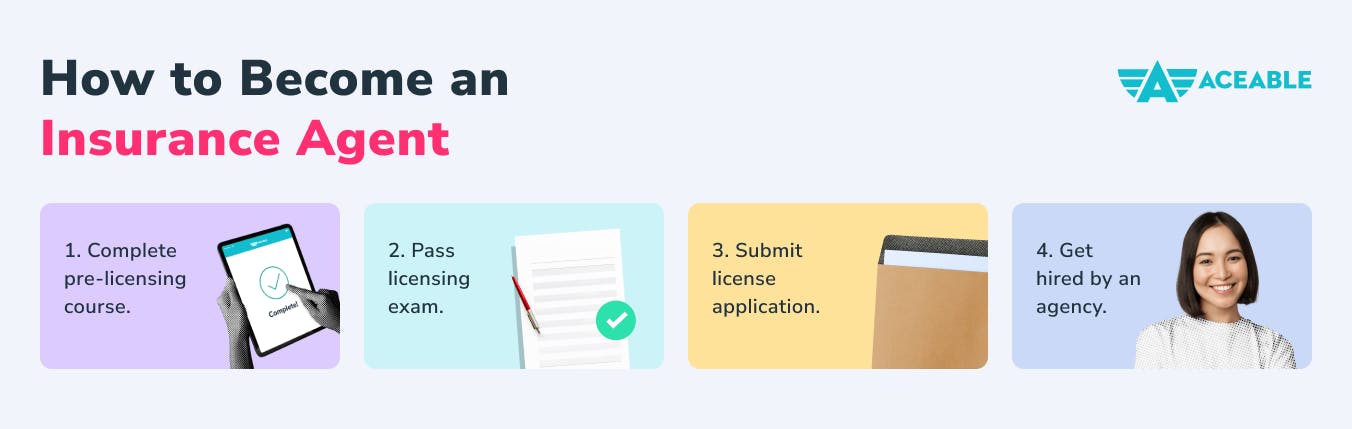
Step 1: Choose Your Line of Authority
The first decision you'll make is what type of insurance you want to sell. In the industry, these specializations are called "lines of authority." Here's an overview of the most common options:
Life insurance: Policies and annuities that provide financial protection for beneficiaries upon the death of the insured.
Health insurance: Medical, disability, Medicare supplement, and long-term care coverage.
Property insurance: Homeowner, commercial property, and inland marine policies that protect physical assets.
Casualty insurance: Auto, workers compensation, crime coverage, and professional liability policies.
Personal lines insurance: Auto, homeowners, renters, and recreational vehicle policies sold directly to individual consumers.
Variable products insurance: Insurance products with an investment component. Selling these requires additional securities licenses.
You can also become an adjuster, investigating and settling claims on behalf of insurance companies.
Many agents combine multiple lines of authority. Property and casualty (P&C) is one of the most popular combinations, offering a broad client base and diverse earning potential.
Step 2: Understand the Basic Requirements
No matter which state you're in, you'll need to meet these general requirements:
- Be at least 18 years old
- Complete state-approved prelicensing education: The required hours and topics vary by state and line of authority
- Pass your state licensing exam: Each line of authority has its own exam
- Clear a background check: Some states also require fingerprinting
- Maintain your license with continuing education: Requirements vary by state
Step 3: Check Your State's Specific Requirements
Every state regulates its own insurance licensing process, which means requirements differ depending on where you plan to sell. Before you begin, confirm your state's specific rules for pre-licensing education hours, exam registration, application fees, and continuing education.
Planning to sell in multiple states? You'll need to follow each state's individual requirements and may need to apply for a non-resident license.
Step 4: Complete Your Prelicensing Education
State-approved prelicensing education prepares you to pass your licensing exam and gives you the foundational knowledge you'll use throughout your career.
Step 5: Pass Your State Exam
Once you've completed your pre-licensing education, you'll schedule and take your state licensing exam. The exam is multiple choice and administered at approved testing centers or online, depending on your state.
Tips for exam success:
- Review your course materials and take practice exams
- Understand key concepts, not just memorize facts
- Get a good night's sleep before test day
- Arrive early and bring required identification
Step 6: Apply for Your License and Start Your Career
After passing your exam, you'll submit your license application through your state's department of insurance. Once approved, you're officially a licensed insurance agent.
From there, you can apply to work with insurance agencies or carriers, or explore opportunities as an independent agent. Many employers hire candidates who are still completing their licensing, so don't wait to start your job search.
Ready to Start Your Insurance Career?
Aceable makes it easy to get your insurance license online. Our state-approved courses are designed to fit your schedule and set you up for exam success.