
How Hard is the Pennsylvania Insurance Exam?

Pennsylvania, pass on the first try.
Aceable's Pennsylvania exam prep is built around the PSI exam content outline, mobile-first, and weighted to the 70/30 split where most candidates lose points.
Quick answer
- It is challenging but very passable: single line exams have 100 questions and a 2 hour time limit, and combined exams have 150 questions.
- You need 70 percent to pass: every exam mixes general insurance concepts with a section on Pennsylvania insurance regulation.
- The surest way to prepare is to study to the state content outline, drill the topics that trip people up, and take timed practice exams before you book with PSI.
How Is the Pennsylvania Insurance Exam Set Up?
The Pennsylvania Insurance DepartmentInsurance Licensing Licensees Initial Insurance Producer Licensing Process Agencies licenses insurance producers, and PSI administers the exams at test centers and through remote proctoring.
- Single line exams: Life, Accident and Health, Property, Casualty and Personal Lines each have 100 questions with a 2 hour time limit.
- Combined exams: Life, Accident and Health and Property and Casualty each have 150 questions and a longer time limit. Check the current PSI bulletin for the exact timing.
- Unscored questions: your exam may include a few experimental questions that do not count toward your score.
- Passing score: 70 percent. Our passing score guidePre License What Score Do You Need To Pass The Pennsylvania Insurance Exam Resources breaks down how scoring works.
On a single-line exam, 100 questions in 120 minutes gives you a little over a minute per question. That is enough time if you know the material and tight if you are reasoning every answer from scratch.
How Does Pennsylvania Compare to Other States?
Pennsylvania's setup looks a lot like other PSI states. WashingtonPre License How To Pass The Washington Insurance Exam On Your First Try Resources and New YorkPre License How Do You Pass The New York Insurance Exam On Your First Try Resources also require 70 percent. North CarolinaPre License How Hard Is The North Carolina Insurance Exam And How Should You Prepare Resources works differently: it tests through Pearson VUE with shorter 55 question exams and a scaled passing score of 70.
Which Topics Trip People Up on the Pennsylvania Exam?
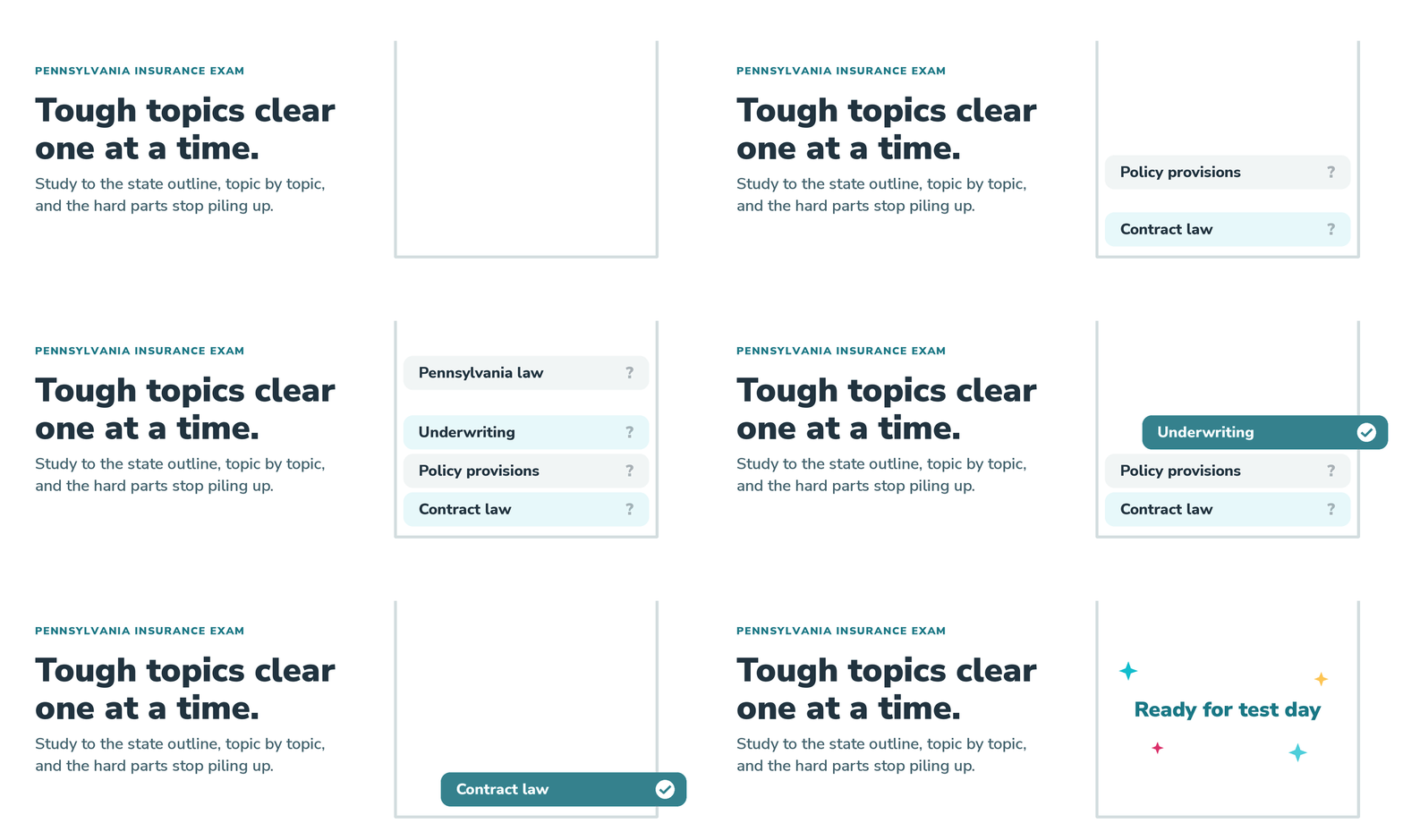
Most points are lost in the same four places.
- Contract law. Terms like indemnity, insurable interest, adhesion and warranty look simple until two of them show up as answer choices on the same question.
- Policy provisions. Grace periods, reinstatement, riders and settlement options on Life, and coverage forms, conditions and exclusions on Property and Casualty, all reward exact knowledge.
- Underwriting. Questions about applications, policy delivery and what happens when information is missing or misstated test the process, not just vocabulary.
- Pennsylvania law. Licensing requirements, producer conduct and the state's own rules form a section that general insurance knowledge will not cover.
Watch the wording, too. Questions that hinge on one word, such as NOT or EXCEPT, catch people who read fast and answer faster.
How Long Should You Study for the Pennsylvania Insurance Exam?
For a single line exam, plan on two to four weeks. For a combined exam, plan on four to seven weeks. The fastest end of each range assumes an hour or more of study most days.
Here is a week by week plan for a combined exam:
- Week one: general insurance concepts and contract law, plus one diagnostic practice exam to find your weak spots.
- Weeks two and three: line content, such as policy types, provisions and riders for Life and Health or coverage forms for Property and Casualty.
- Week four: Pennsylvania regulation as its own unit, with quizzes until the rules feel automatic.
- Week five: full timed practice exams, then review every miss until you can explain the right answer.
- Final days: light review only, plus a quick check that your ID and appointment details are ready.
Want more techniques that work? Try these study strategiesPre License How To Study Insurance Licensing Exam Resources.
Choose a State & Course
Free daily practice question
The Pennsylvania exam rewards steady review. Get one exam-style question each morning, with a full explanation, so the concepts feel familiar by test day.

What Does Aceable's Pennsylvania Exam Prep Include?
Aceable Insurance's Pennsylvania exam prep follows the state content outline from the first lesson to the last practice exam. You study in short, focused lessons on your phone or laptop, test yourself with exam style questions, and see exactly which topics still need work before test day. Pennsylvania exam prep also includes the Aceable Pass Guarantee.
Already Licensed in Another State?
If you hold a resident license elsewhere and are moving to Pennsylvania, you may qualify for an exam exemption instead of retesting. Our guide to Pennsylvania reciprocity walks through how it works.
What Can Slow Down the Licensing Process in Pennsylvania?
- Booking your exam before practice scores are steady, which can mean paying for a retake.
- Showing up without valid government issued identification, whether you test in person or remotely.
- Waiting too long to schedule fingerprinting, which is required for new resident producers.
- Delaying your license application, which you can submit through Sircon or NIPR as soon as you pass.
Frequently Asked Questions
What score do you need to pass the Pennsylvania insurance exam?
You need 70 percent to pass any Pennsylvania insurance producer exam.
How many questions are on the Pennsylvania insurance exam?
Single line exams have 100 questions with a 2 hour time limit. Combined Life, Accident and Health and combined Property and Casualty exams have 150 questions.
Can you take the Pennsylvania insurance exam online?
Yes. PSI offers remote testing, and you will show your identification to the remote proctor before you begin.
Your Pennsylvania License Is Closer Than It Looks
The Pennsylvania exam is tough on people who wing it and fair to people who prepare. Start PA exam prep built to the state outline, clear the tricky topics one at a time, and book your exam when your practice scores say you are ready.
Tough Topics, Meet Your Match
Pennsylvania exam prep built to the state outline, one bite size lesson at a time.